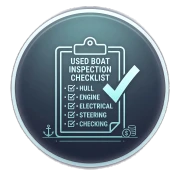
Used Boat Inspection Checklist: What to Check Before You Buy
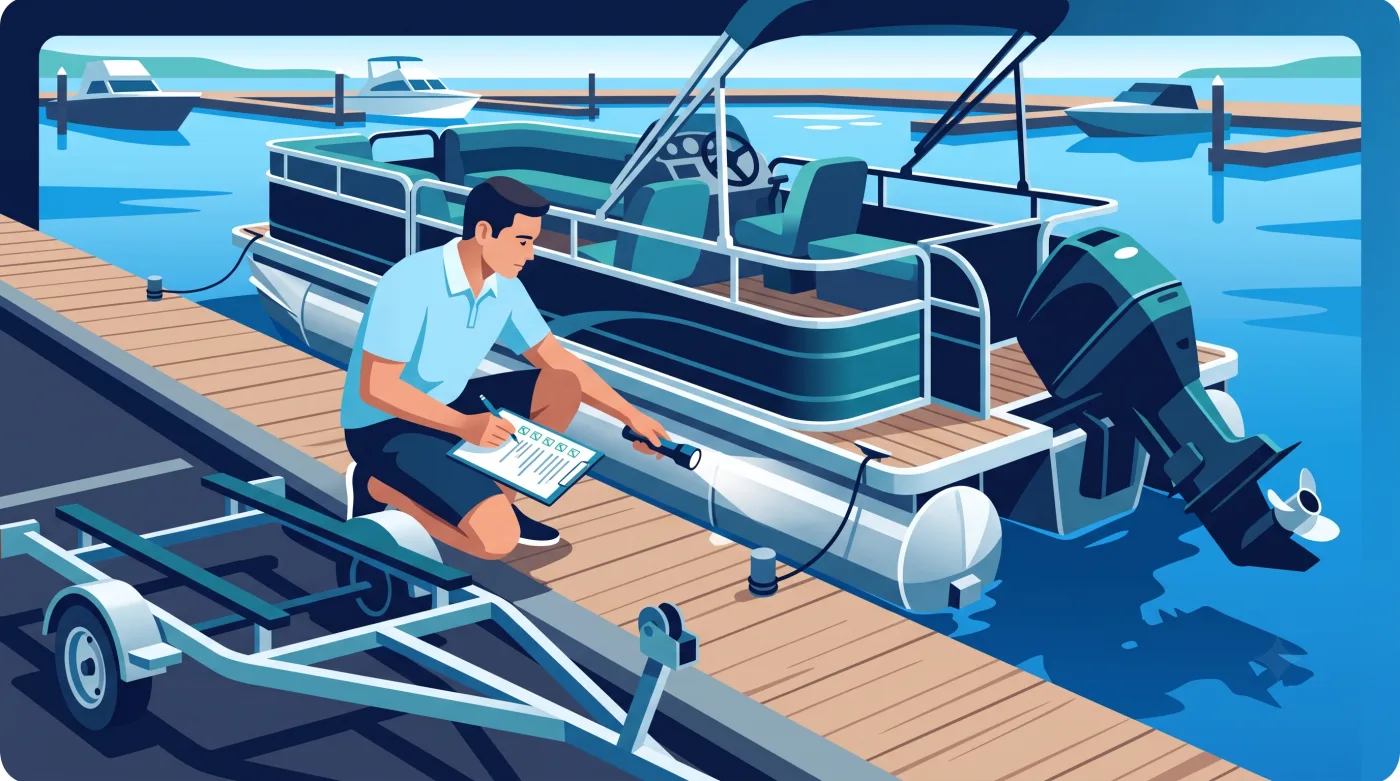
Most used-boat horror stories trace back to the same root cause: skipping a real inspection because the boat "looked fine" at the dock. A used boat can look great from ten feet away and still have a soft transom, a corroded wiring harness, or a lien against the title — none of which you'll catch without actually checking.
Here's a framework that applies to any boat, plus where to go for the specific points that matter for your exact boat type.
Step 1: Check the Boat's History Before You Inspect It
Do this before you spend an afternoon crawling through the bilge of a boat that turns out to be stolen or lien-encumbered. Run the Hull Identification Number (HIN) — stamped on the starboard side of the transom — through a title/theft history check. It takes a few minutes and can save you from wasting time on a boat that was never really for sale to begin with.
While you're at it, ask the seller directly for maintenance records and engine hours. A seller who can't or won't produce any service history is itself a data point worth weighing.
Step 2: Hull and Structure
- Gelcoat or paint for cracks, spidering, or repairs that don't match the surrounding finish (a sign of prior damage)
- Soft spots in the deck or floor — walk the entire deck and press firmly with your foot, especially around hardware mounts
- Transom condition — this bears the engine's weight and torque, and is one of the most expensive things to repair if compromised
- Below the waterline, if accessible: blistering (fiberglass), corrosion (aluminum), or any visible repairs
Step 3: Engine and Mechanical
- Engine hours relative to age — very low hours on a very old engine isn't automatically a good sign; long periods of disuse cause their own problems
- Start the engine cold if at all possible — a seller who insists on starting it before you arrive is worth asking why
- Listen and look for smoke, unusual noise, or excessive vibration at idle and under load
- Bilge condition — a suspiciously clean, dry bilge on an older boat can mean it was cleaned specifically to hide a leak
Step 4: Electrical and Systems
- Wiring age and condition — corrosion at connections is common and expensive to chase down once it starts
- All electronics actually power on and function, not just that they're installed
- Battery condition and date — batteries are consumables, expect to budget for replacement if they're several years old
- Bilge pump actually runs when triggered — this is a safety item, not a nice-to-have
Get the Checklist for Your Exact Boat
Select your boat type for the specific points that matter for it — check them off as you go.
Open the Inspection Checklist →Step 5: The Sea Trial
Never buy a boat you haven't personally driven. A sea trial reveals things a static dockside inspection never will: how the engine performs under real load, whether it planes and steers correctly, and whether anything vibrates, leaks, or overheats once it's actually working.
Bring the seller along if possible — a legitimate seller has no reason to avoid it, and their familiarity with the boat's quirks during the trial can itself be informative.
Step 6: Know When to Hire a Professional
For anything beyond a modest trailerable boat — and especially for cabin cruisers, trawlers, and sailboats — a certified marine surveyor's few hundred to few thousand dollars is genuinely cheap insurance against a five- or six-figure mistake. See our guide on marine surveys for when it's worth it and what it actually costs.
Ready to Inspect Your Candidate?
Pull up the checklist for your specific boat type, check the boat's history, and know exactly what to look for before you make an offer.
Open the Inspection Checklist